











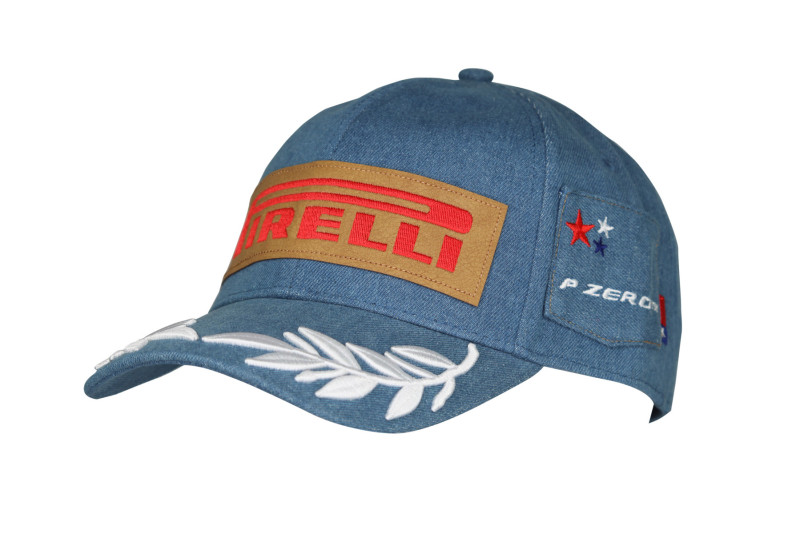
A special cap for the Austin race
As happened this year for the first time in Miami and then in Montreal, Silverstone and Monza, the Podium Cap of the FORMULA 1 PIRELLI UNITED STATES GRAND PRIX 2024 will be in a special edition, made in denim. Denim, which was first used to make work clothes, especially jeans since the 1930s. Now, they are very much in everyday use, made popular by the likes of movie stars such as Marlon Brando and James Dean, who gave them cultural significance as a symbol of freedom and rebellion. As with the other special edition caps, the Austin Podium Caps will also be on sale at https://afbmotorsport.com/en/contenido/pirelli-podium-cap-f1-special-editions-26 and on the Fanatics and Stichd platforms.


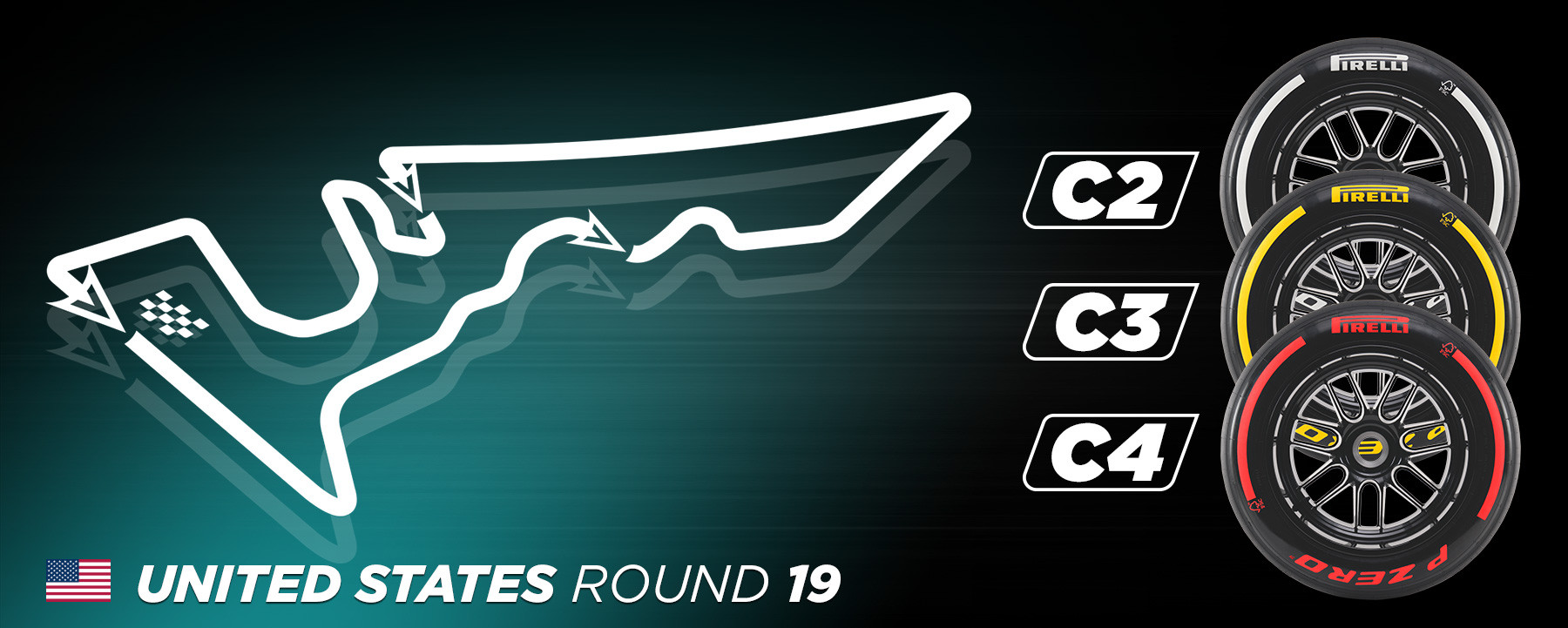
This year’s United States Grand Prix, the first leg of an all-American triple-header also sees changes to the track at COTA (the Circuit of the Americas) as much of it has been resurfaced, completing the work begun two years ago. This includes the sections between turns 9 and 12 and 16 and 3, which thus includes the two longest straights where DRS can be used. The abrasiveness of the track could therefore have changed since last year, given that a new layer of bitumen is usually smoother than an old track surface. This adds to the importance of acquiring as much data as possible during the one and only hour of free practice, early on Friday afternoon as the Sprint format returns for the Austin weekend. Other changes include the use of fake gravel for the run-off areas at some corners, as already seen at other tracks, Zandvoort for example. This has been done to alleviate the controversy that can arise over exceeding track limits, without the problem of real gravel being thrown onto the track. The new surface should also have dealt with the problem of the small bumps that have developed on the racing line at some points over the years, which made life hard for the drivers and upset the car’s handling.
The dry weather compounds chosen are the same as those used for the past two editions of the Austin round, namely the C2 as Hard, the C3 as Medium and the C4 as Soft. COTA really does have a bit of everything, partly because the track designed by Hermann Tilke takes its inspiration from some of the most demanding and much loved tracks such as Silverstone and Suzuka (turns 3 to 6), Hockenheim (a sort of Motodrom from 12 to 15) and the section from 16 to 18, which owes something to the never-ending turn 8 at Istanbul’s Otopark. However, Austin’s stand-out feature is the steep climb off the line to the first corner, which is very wide and therefore sees drivers taking a variety of lines through it, which always makes for spectacular viewing.
In terms of the forces exerted on the tyres, the loads at COTA are fairly evenly distributed between the front and rear axles and are more lateral than vertical. Usually, degradation is thermal and is therefore linked to the ambient temperature which in Texas in October can fluctuate considerably from one day to the next. In terms of strategy, one will need to wait and see how this might be affected by the new surface, keeping in mind that Saturday’s Sprint should provide plenty of useful data. In last year’s short race, the Medium was chosen by the majority of drivers, although some risked using the Soft, which was then only used in the final stages of the following day’s Grand Prix in an attempt to secure the additional point for setting the fastest race lap. Normally, a two-stop has always been the quickest here, especially as a one-stop involves a lot of careful degradation management, to the obvious detriment of performance. In 2023, the most used compound was the C3, which was more effective than the C2 and now it will be interesting to see if the new asphalt could bring the Hard back into play.
Austin is the second of three races this season in the USA, following on from Miami and preceding Las Vegas. It seems that Formula 1 has finally found its way into the psyche of the star-spangled fans, even if there were three races back in 1983, in Long Beach, Detroit and Las Vegas. In fact, the USA sits fourth on the list of countries that have hosted the most races with 77, although that includes 11 Indianapolis 500 races that counted towards the Drivers’ World Championship from 1950 to 1960. Heading this list are Great Britain and Germany on 79 apiece and Italy on 107. There have been eleven venues for the USA GP: Austin (11), Dallas (1), Detroit (7), Indianapolis (19), Las Vegas (3), Long Beach (8), Miami (3), Phoenix (3), Riverside (1), Sebring (1) and Watkins Glen (20). An unusual statistic: the two drivers with the most USA Grands Prix will be on track this weekend, as Lewis Hamilton and Max Verstappen both have six wins to their name. As for the teams, here too there are joint leaders, with Ferrari and McLaren both on 13. Will this weekend see a clear leader emerge?


Founded in 1872, Pirelli is a company with deep Italian roots now recognised all over the world for its cutting-edge technology, capacity for innovation, and the quality of its products. Motorsport has always played an important part in Pirelli’s strategy, following the ‘race to road’ philosophy. The company has been engaged in motorsport for 117 years and today supplies tyres to more than 350 championships on both two and four wheels. Pirelli pays constant attention to the most efficient use of natural resources and energy, and will reach carbon neutrality by 2030.
Pirelli has been Global Tyre Partner of the FIA Formula 1 World Championship since 2011. The company also supplies championships including FIA Formula 2, FIA Formula 3, Formula Regional European Championship by Alpine, FIA World Rally Championship and GT World Challenge, alongside numerous national series.