











The night-time challenge of Las Vegas
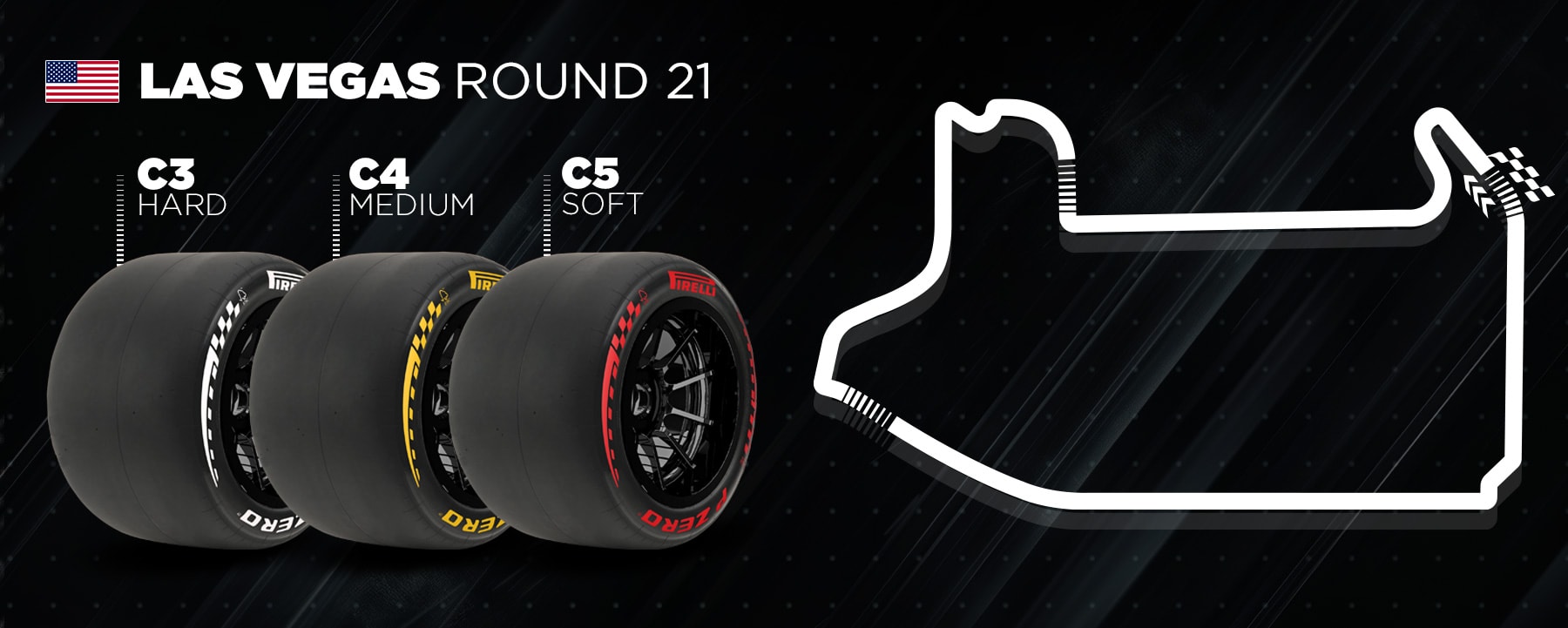
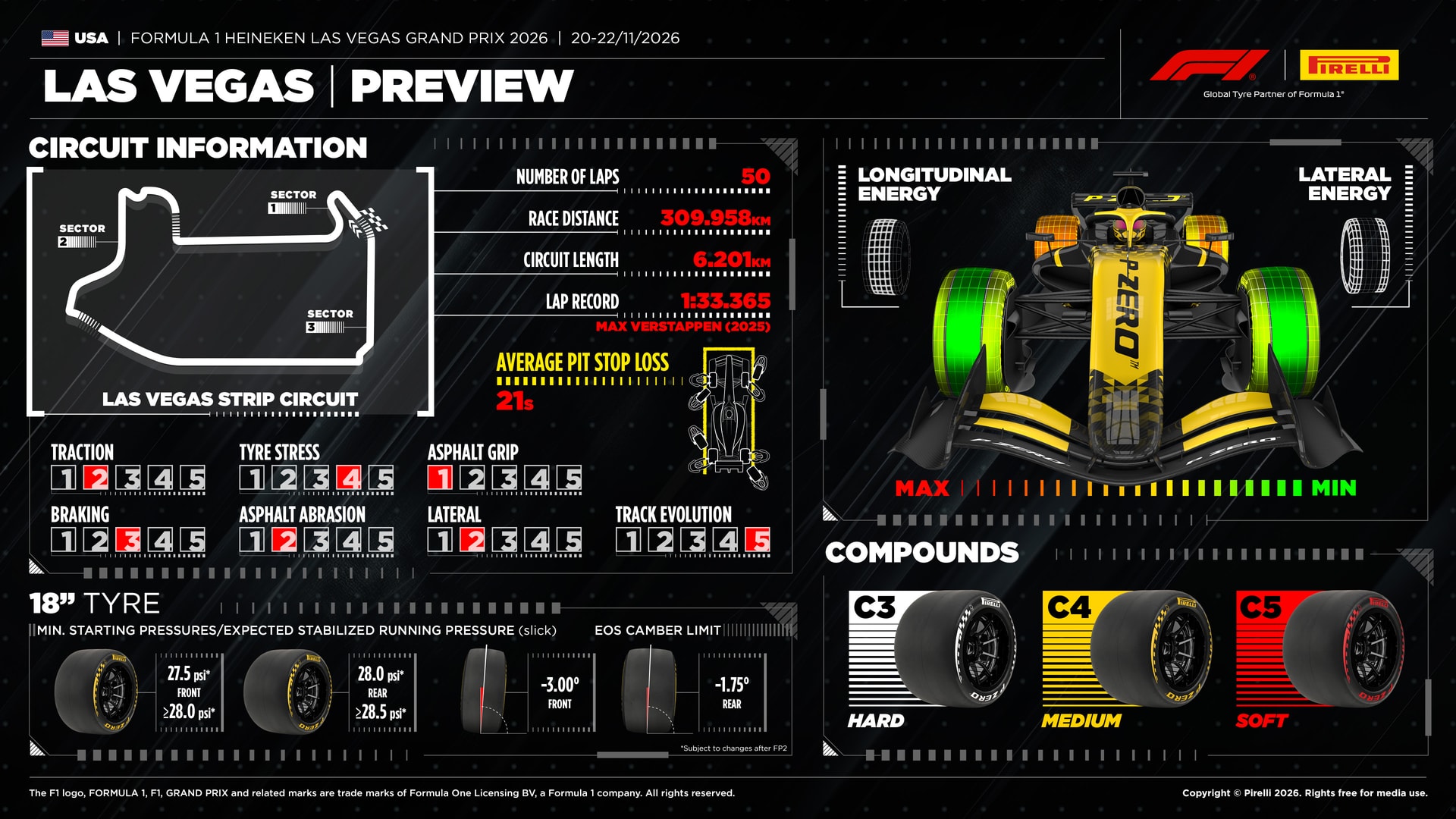
Formula 1 heads to one of the most unusual events on the calendar with the Las Vegas Grand Prix, the third-to-last round of the 2026 season. The 6.201-kilometre street circuit in Nevada features three long straights and 17 corners. As in previous editions of the event, the first two free practice sessions will take place on Thursday, followed by FP3 and qualifying on Friday, while the race is scheduled to start at 20:00 on Saturday evening.
The main technical challenge will be tyre management in environmental conditions that are highly unusual for Formula 1, with air temperatures expected to range between 10 and 15°C due to the wide temperature swings between day and night in the gambling capital of the world. As is typical of street circuits, grip levels in Las Vegas will initially be limited.
The track is reopened to public traffic every day and is therefore subject to a constant reset of its surface conditions, with dust and sand accumulating on the asphalt and making grip evolution particularly difficult to predict throughout the weekend. This year, only minor resurfacing work has been carried out, consisting of repairs to sections of asphalt on the entry to Turn 13 and on the right-hand side of the stretch leading to Turn 14.
The long full-throttle sections are a defining characteristic of the Las Vegas Strip Circuit. The high speeds reduce the energy transferred to the tyres, making it more difficult to keep them within the correct operating window. For this reason, tyre warm-up will be one of the key factors throughout the weekend, particularly in qualifying.
Preparing for the flying lap could therefore become even more important than at other circuits, especially given the low level of grip. It is not impossible that some teams may opt for consecutive preparation laps and timed runs, limiting cooling laps in order to preserve tyre temperatures.
Tyre loads are not particularly high, with the exception of the middle sector, which features several high-speed corners. Graining could once again make an appearance due to the low grip levels and cool temperatures, as seen in previous editions of the race. In this case, degradation would be primarily mechanical in nature.
Another factor to monitor will be brake lock-ups. The long straights end in demanding braking zones, where the risk of flat spots can become significant in both qualifying and the race. Drivers will therefore need to avoid locking the front tyres at the most critical points of the circuit in order not to compromise a set of tyres.
On paper, the fastest strategy is likely to be a one-stop race, with all three compounds potentially playing a role. Even the C5, which in its current specification has demonstrated good versatility, could represent a valid option for a race stint.
The characteristics of this circuit also reduce the effectiveness of the traditional undercut strategy. Following a pit stop, tyres tend to lose temperature quickly along the long section between the pit-exit and the more demanding parts of the lap, reducing the advantage normally associated with fresh tyres.
Last year's edition was affected by rain during qualifying, resulting in extensive use of wet-weather tyres. Should similar conditions arise again, the Full Wet could prove particularly effective. The low temperatures and circuit layout favour a tyre with a deeper tread pattern, capable of generating and retaining temperature more easily than the Intermediate.
IN 2025
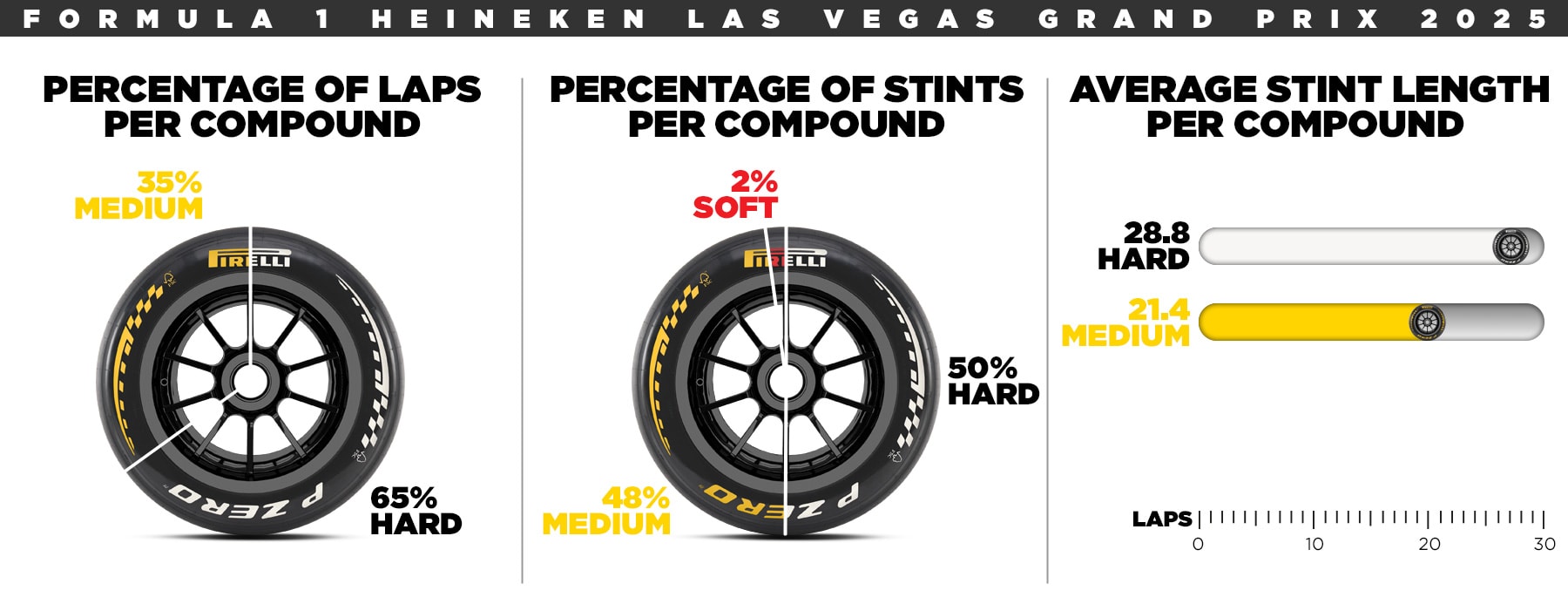
Last year's Las Vegas Grand Prix was characterised by one-stop strategies, with the Medium and Hard compounds sharing the entire race distance between them. The three drivers who finished on the podium all started on the yellow-marked tyres before switching to the C3 for the remainder of the race. The only driver to start on the Soft was Kimi Antonelli, who replaced them with a set of Hard tyres on lap two.
STATISTICS
The Las Vegas Grand Prix reaches its fourth edition this year. Across the three races held so far on the street circuit in the entertainment capital of Nevada, Max Verstappen has taken two victories, in 2023 and 2025, while George Russell claimed the top step of the podium in the 2024 edition. Red Bull also leads the constructors' tally with two wins, one more than Mercedes.
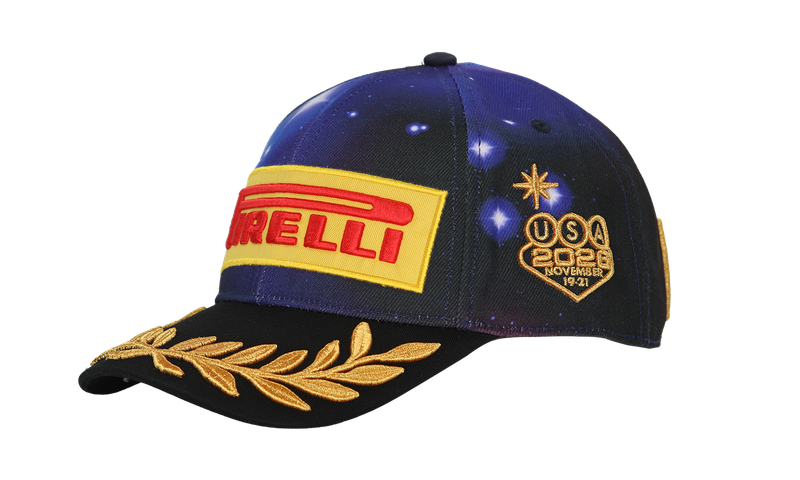
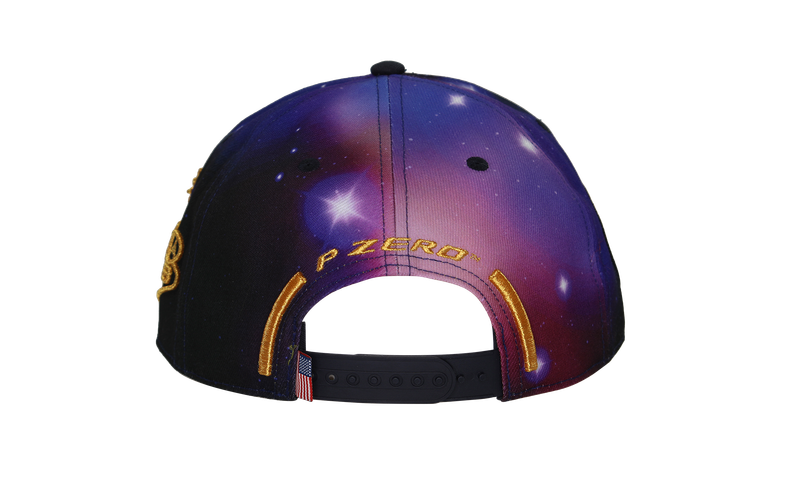
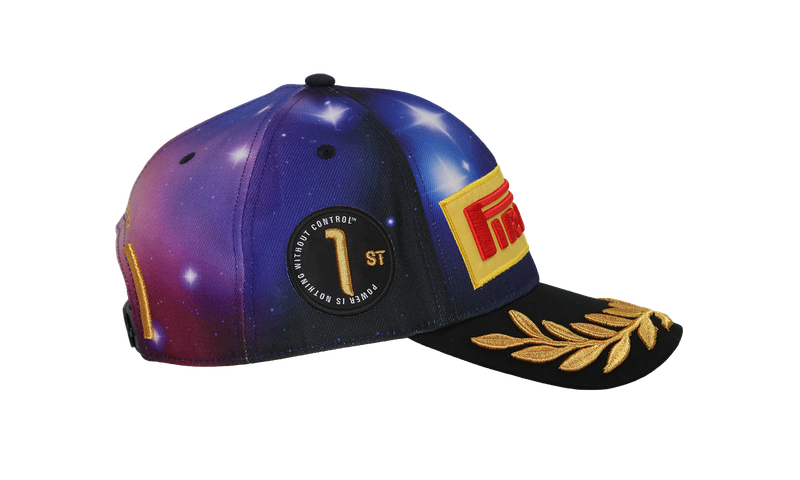
PODIUM CAP SPECIAL EDITION
The star-filled skies of the Nevada desert provide the inspiration for the Las Vegas Grand Prix Podium Cap. Created for Formula 1's night race, the cap celebrates the constellations visible above the American city, reflecting the unique atmosphere that defines the most dazzling weekend of the season. This special edition Podium Cap has been designed by Denis Dekovic for Pirelli Design and combines the allure of the night sky with the identity of the Las Vegas Grand Prix. The cap is already available to purchase on Pirelli's e-commerce platform: store.pirelli.com.
Founded in 1872, Pirelli is a company with deep Italian roots now recognised all over the world for its cutting-edge technology, capacity for innovation, and the quality of its products. Motorsport has always played an important part in Pirelli’s strategy, following the ‘race to road’ philosophy. The company has been engaged in motorsport for 119 years and today supplies tyres to more than 350 championships on both two and four wheels. Pirelli pays constant attention to the most efficient use of natural resources and energy, and will reach carbon neutrality by 2030.
Pirelli has been Global Tyre Partner of the FIA Formula 1 World Championship since 2011. The company also supplies championships including FIA Formula 2, FIA Formula 3, Formula Regional European Championship by Alpine and GT World Challenge, alongside numerous national series.