











The Suzuka challenge with the hardest trio in the range
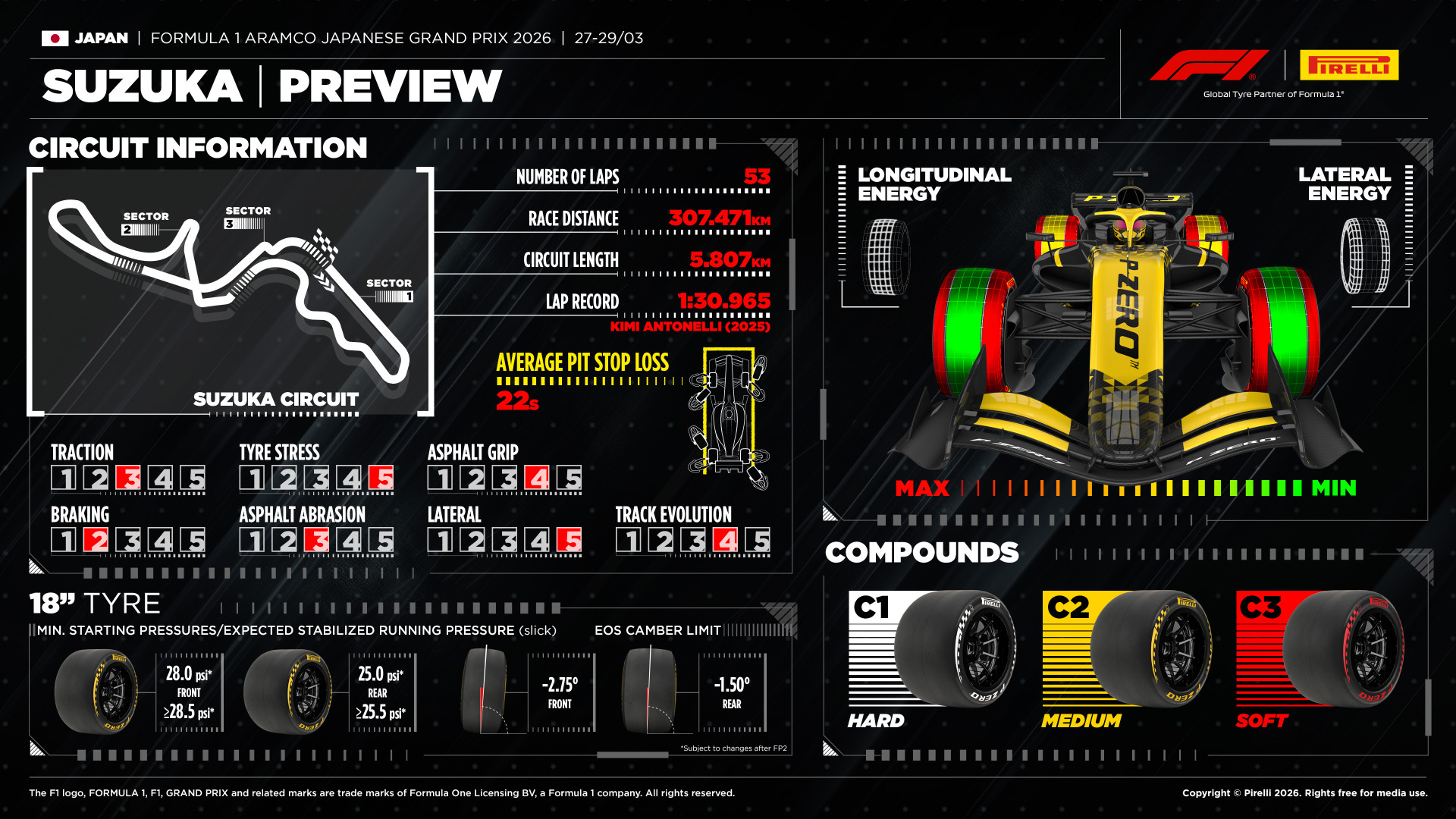
Suzuka is one of the most beloved circuits among Formula 1 drivers because it truly showcases their driving skills. The Japanese Grand Prix track is also one of the most demanding on the calendar with its eighteen corners, several of them iconic in the sport’s history, and to its distinctive figureof-eight layout.
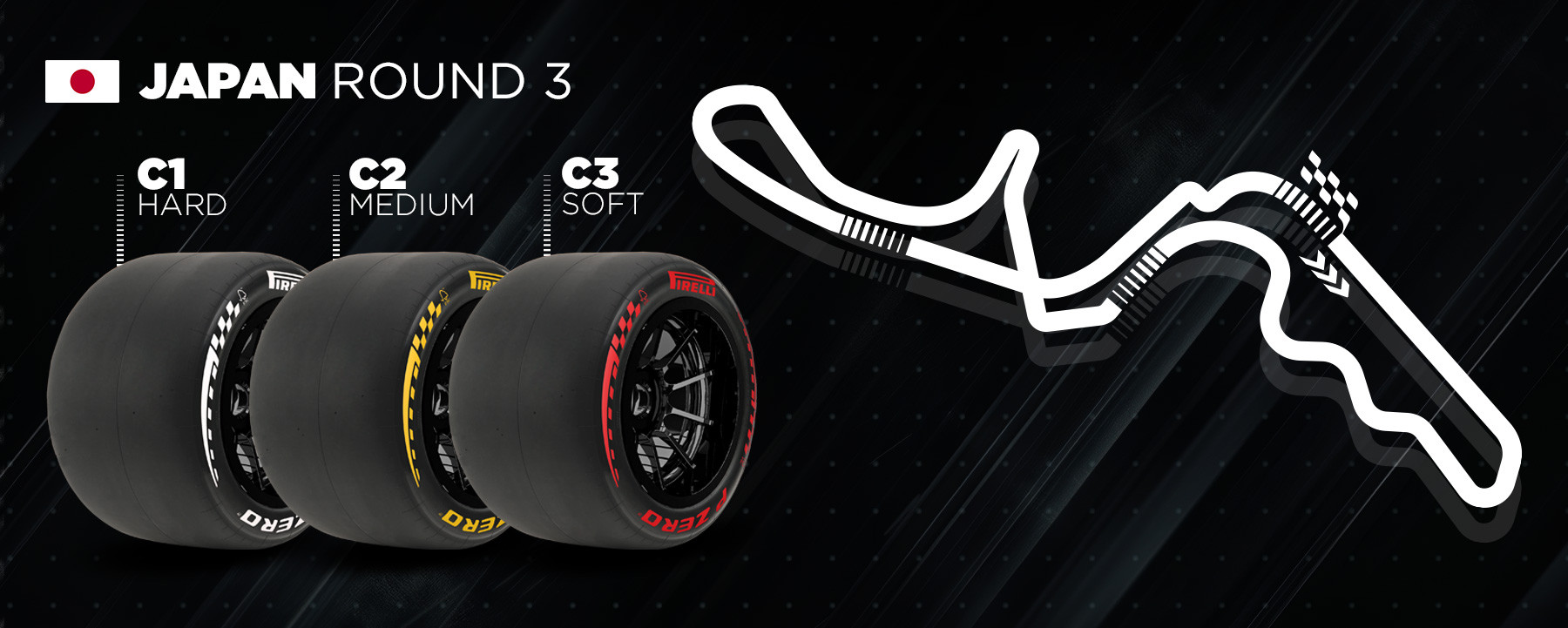
The forces and loads generated by the continuous changes of direction, combined with highspeed sections, make the 5.807kilometre Japanese track one of the toughest for tyres. The compounds selected are therefore the three hardest in the range: C1 for the Hard, C2 for the Mediums and C3 for the Soft. This means the hardest option, C1, will make its debut in Suzuka, having not been chosen for the first two race weekends of the season.
The Honda-owned circuit was resurfaced ahead of the 2025 event, from the exit of the first chicane to the end of the first sector. This year the work continued with the substantial completion of the remaining two sectors up to Turn 17. The asphalt is therefore expected to be smooth and still dirty, offering relatively low grip.
In these conditions it is normal to expect some graining, particularly with the softest compound. Last year its appearance, limited to the front axle, progressively diminished after the opening day thanks to the track evolution.
However, the wider extent of the new asphalt surface, which has similar characteristics to that of the first sector, could require closer monitoring of the phenomenon this year and of its impact on degradation. By Friday we will already have a clearer idea of what the teams can expect over the weekend.
It will be particularly interesting to observe the behaviour of both the hardest and the softest compounds in the selection. Should the C1 offer good grip levels and the C3 prove as consistent as it did in Shanghai, all three options could play a significant role in shaping the race strategies.
Temperature will also be a key factor. The Japanese Grand Prix is held one week earlier than last year, when ambient temperatures had already settled around 15°C.
If there are no significant increases, thermal degradation will remain contained. The possibility of completing the race with a single stop could therefore depend on the actual extent of the graining and its consequent influence on performance. Certainly, the teams will need to pay close attention to qualifying preparation, when it will be essential to bring the tyres up to the correct temperature.
IN 2025
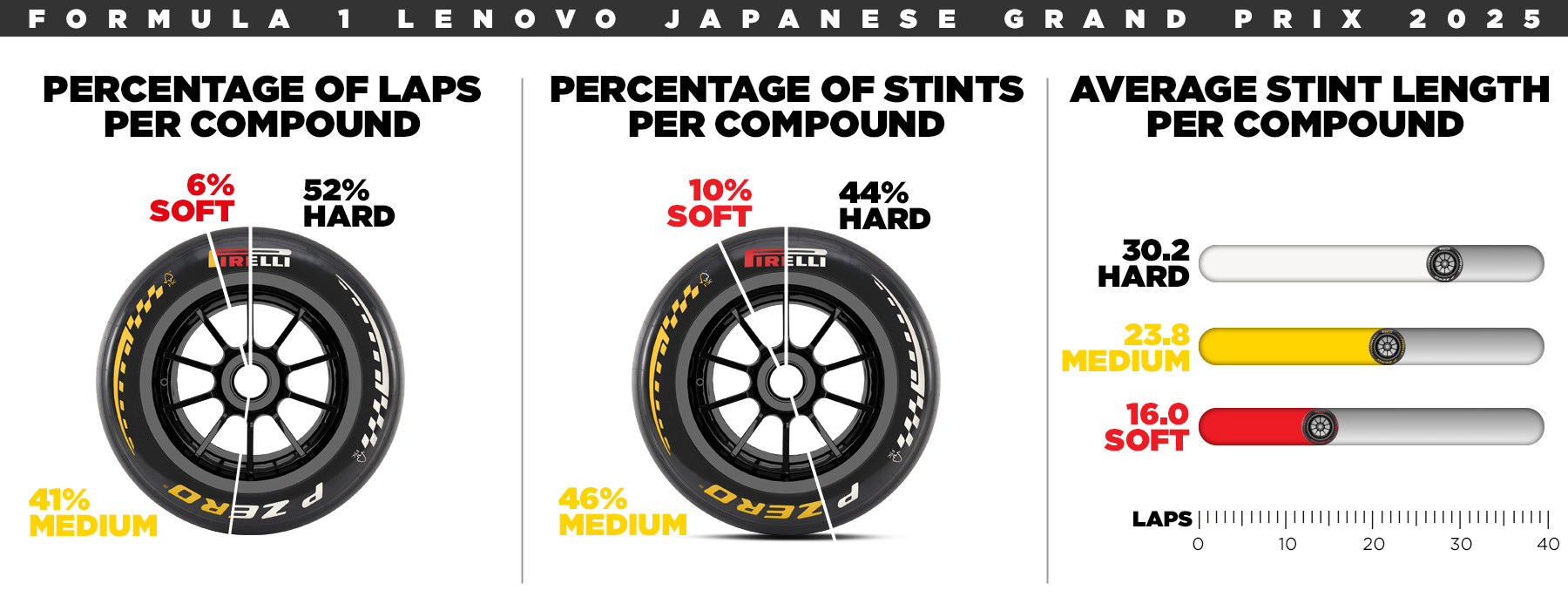
The fastest strategic option in Suzuka last year, and the one chosen by most drivers, was a one‑stop. Fifteen cars started on the Medium compound, while a couple at the back opted for the Soft and another couple for the Hard. In the second stint the latter became the star of the show. The low temperatures enabled very long stints with both of the harder compounds without any significant lap‑time drop‑off. The three drivers who finished on the podium all swapped the Medium for the Hard around lap twenty, and completed the race on that compound all the way to the chequered flag.
STATISTICS
The upcoming race will be the fortieth Japanese Grand Prix. The first edition was held in 1976 at Fuji, which has hosted four races in total. All other events have taken place at Suzuka. Michael Schumacher is the most successful driver in Japan with six wins, one more than Lewis Hamilton. McLaren leads the constructors’ standings with nine victories, followed by Red Bull with eight.
PODIUM CAP SPECIAL EDITION
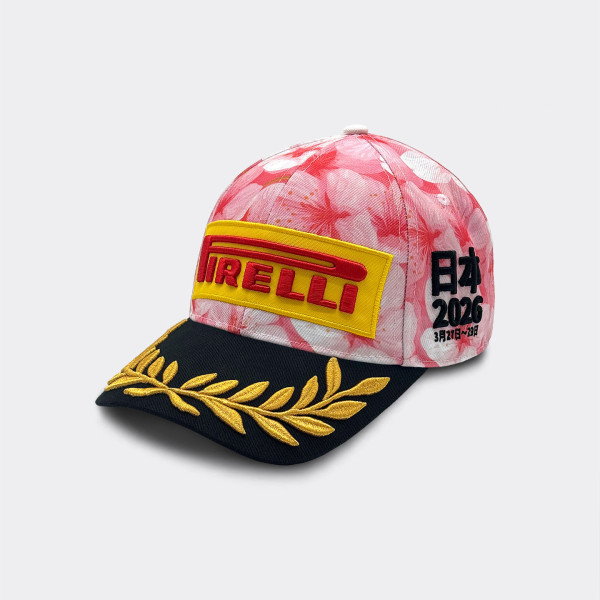
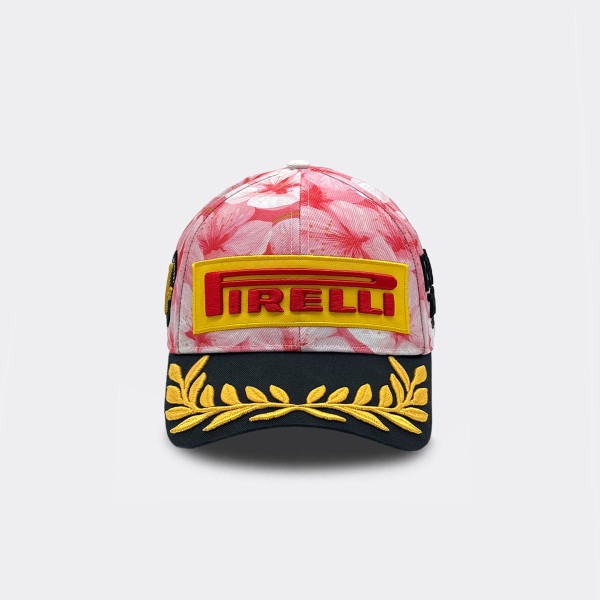
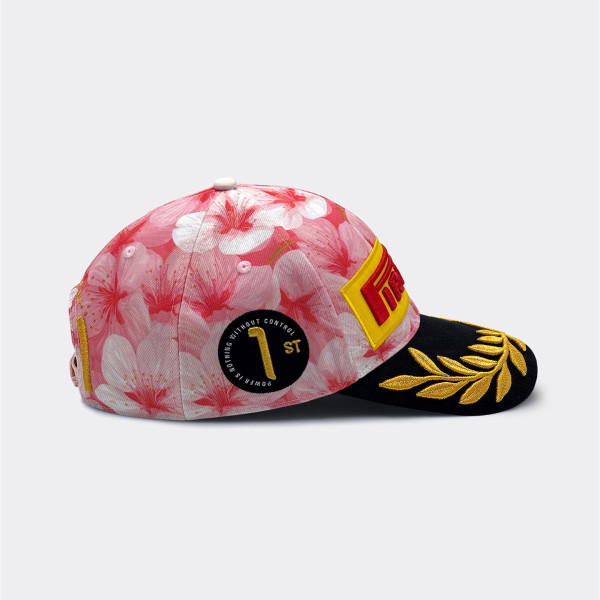
The third podium cap created by Pirelli Design in collaboration with designer Denis Dekovic is inspired by cherry blossoms and will be the cap worn by the drivers on the podium after the Japanese Grand Prix. The sakura bloom, which coincides with the period when Suzuka hosts the race, is featured on the Pirelli cap, which is already available for purchase on the e‑commerce platform https://store.pirelli.com.
Founded in 1872, Pirelli is a company with deep Italian roots now recognised all over the world for its cutting-edge technology, capacity for innovation, and the quality of its products. Motorsport has always played an important part in Pirelli’s strategy, following the ‘race to road’ philosophy. The company has been engaged in motorsport for 119 years and today supplies tyres to more than 350 championships on both two and four wheels. Pirelli pays constant attention to the most efficient use of natural resources and energy, and will reach carbon neutrality by 2030.
Pirelli has been Global Tyre Partner of the FIA Formula 1 World Championship since 2011. The company also supplies championships including FIA Formula 2, FIA Formula 3, Formula Regional European Championship by Alpine and GT World Challenge, alongside numerous national series.