








Tyre strategy at the forefront of a tactical and thrilling race
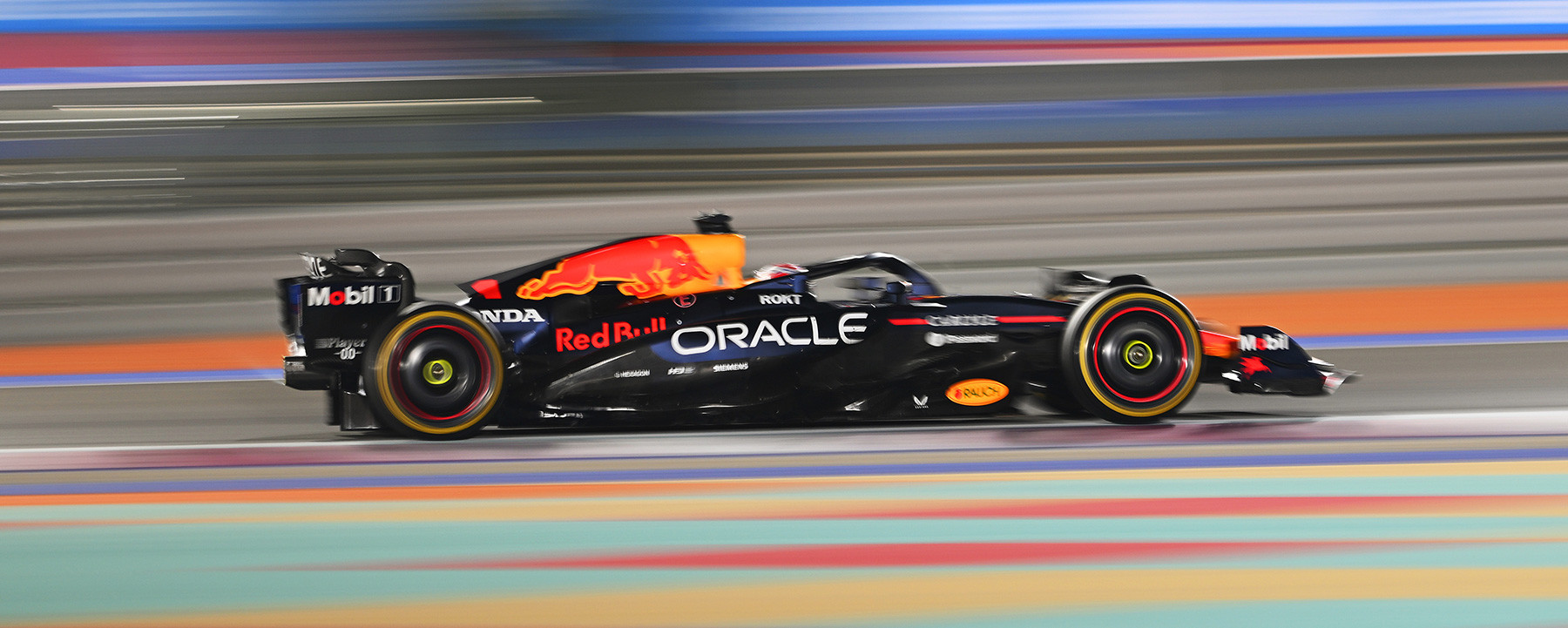
Red Bull’s Max Verstappen sealed his seventh win of the season tonight, with tyre strategy at the centre of the action, to take a three-way title fight to the championship finale in Abu Dhabi next weekend.
All three tyre compounds were seen on the grid and at the chequered flag, but the pivotal moment was the appearance of a safety car on lap seven: for the fourth time at four races held in Qatar so far.
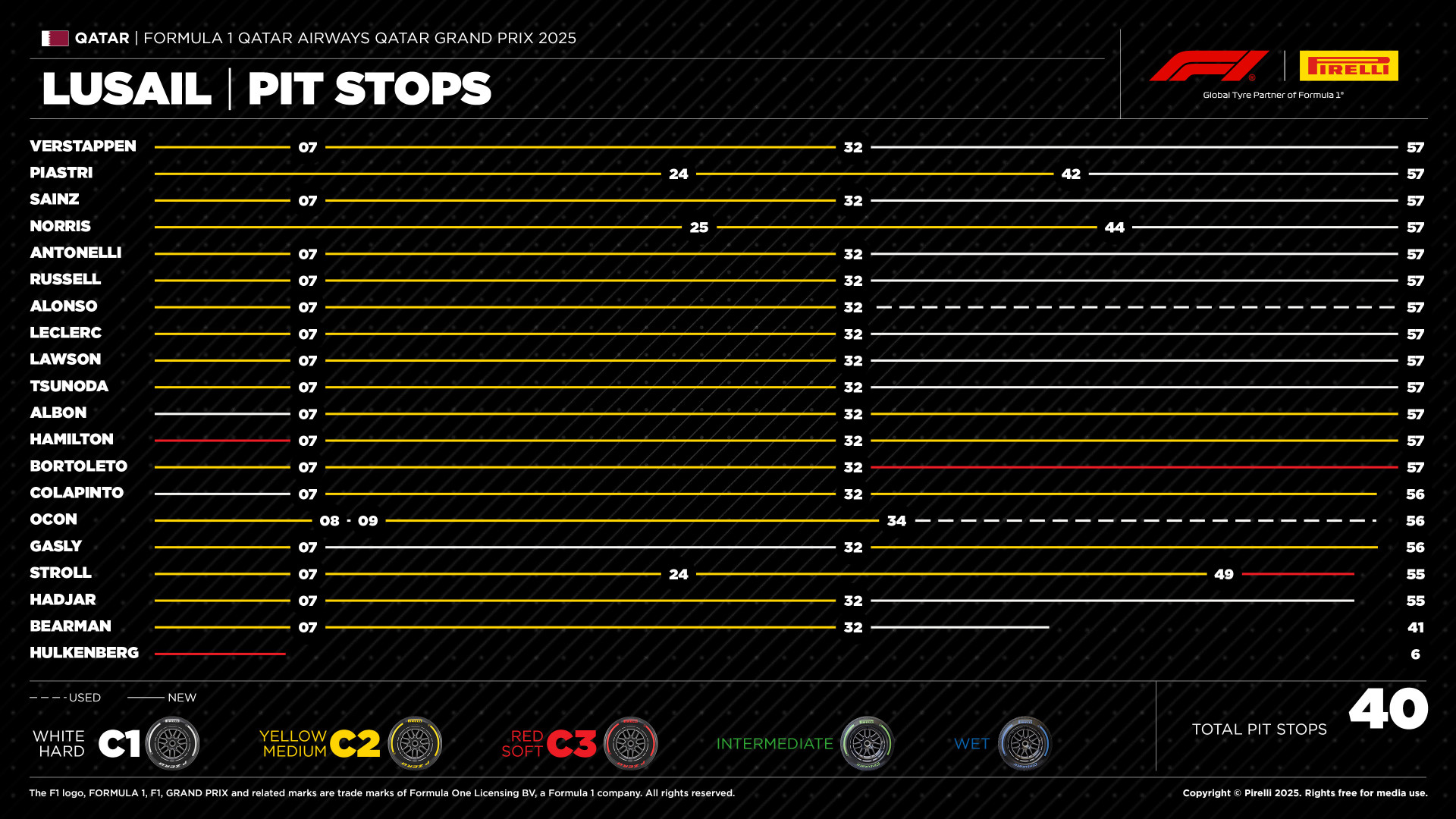
With most drivers starting on the medium tyre, all but the two McLarens pitted to put on a fresh set of tyres under the safety car – with Verstappen, who had forced his way up to second from third on the grid, the first to come in.
Pitting under the safety car carries an advantage of roughly 10 seconds compared to green flag running, and it was here that Verstappen built his crucial advantage.
Adding to the tactical complexity today was the fact that each tyre set had a 25-lap limit specifically for the 57-lap Qatar Grand Prix: meaning that the McLarens were then out of sync with everybody else in terms of strategy.
The other drivers had to pit by lap 32 for their final stops, with McLaren staying out longer on each stint as a result of their earlier decision not to pit under the safety car.
Oscar Piastri relinquished the lead on lap 42 for his last pit stop, with his team mate Lando Norris coming in two laps later as Verstappen consolidated the lead.
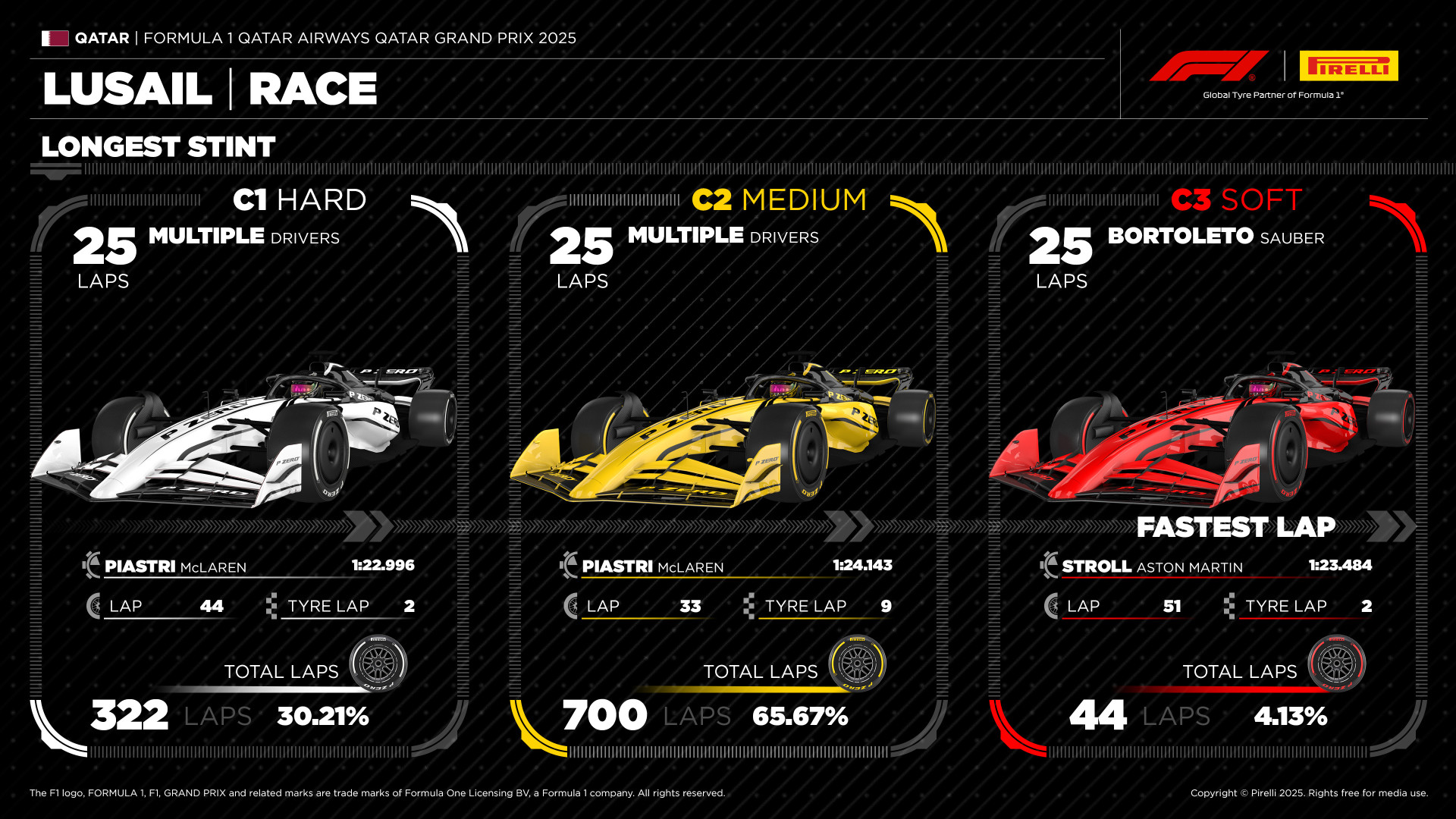
Nearly all the drivers ran their two opening stints on the medium before switching to the hard for the final stint, including all three podium finishers. Piastri set the fastest lap of the race on both the medium and the hard tyres – with the overall fastest lap, which was also the new race lap record of 1m22.996s, coming on the hard compound on lap 44.
That final place on the podium was claimed by Williams driver Carlos Sainz, who adopted a perfect strategy to clinch his second podium of the year from seventh on the grid.
Conditions were cool at the challenging Lusail circuit this year, with ambient temperatures of 22 degrees centigrade and 23 degrees on track as the race got going under the spotlights at 19:00 local time.
MARIO ISOLA – PIRELLI DIRECTOR OF MOTORSPORT
“All the strategic choices in today’s race were conditioned by the arrival of the safety car. The compound considered to be the best compromise between getting good grip right from the start, and also maintaining an adequate performance level throughout the duration of the stint, was the medium.
Although nearly every driver only used the hard for the final stint to the flag, the C1 compound would also have been competitive halfway through the race. The lap times showed that in some cases it offered better performance than the C2 medium in the final laps. All the compounds displayed very limited wear, allowing drivers to push to the maximum.
There was a lot less graining compared to previous days, which reduced cases of extreme wear but did not eliminate them entirely. As a result, the 25-lap limit was shown to be appropriate to avoid any issues.
The fascinating twists and turns of this race, with unprecedented levels of performance and new circuit records set throughout the weekend, reflect an entire season with closer competition than ever. So it’s perhaps no surprise that the championship now gets decided at the last race, with three very worthy contenders going into battle for the final time next weekend.”

Leonardo Fornaroli is Italy’s latest champion as the Invicta driver converted pole to championship victory in the 22-lap Formula 2 feature race, where he finished runner-up. Fornaroli had actually qualified second too, but a grid penalty for MP Motorsport’s Oliver Goethe promoted the Italian to the top spot.
The majority of drivers elected to start the race on the soft tyre, with seven drivers (outside of the top 10 on the grid) choosing the hard.
With the race taking part in the heat of the day, drivers faced a much faster tyre warm-up compared to yesterday’s night sprint. The mandatory pit stop window opened from lap six, so it was a case of maintaining optimal performance from the soft throughout the first quarter of the race. In the closing stages, managing wear life was key.
Eventual winner Victor Martins (ART Grand Prix) jumped Fornaroli at the start, and made his stop for the hard tyre on lap seven. Once all the stops had shuffled through, Martins maintained his advantage – despite a mid-race safety car – while second for Fornaroli was enough to seal the title: giving him back-to-back championships in F3 and F2.
The alternative strategy from hard to soft proved to be generally less effective, but the timing of the safety car still made it more viable than expected. Notably, Arvid Lindblad (Campos Racing) started from P17 on the hard tyre than finished in P4 with the soft.
Founded in 1872, Pirelli is a company with deep Italian roots now recognised all over the world for its cutting-edge technology, capacity for innovation, and the quality of its products. Motorsport has always played an important part in Pirelli’s strategy, following the ‘race to road’ philosophy. The company has been engaged in motorsport for 128 years and today supplies tyres to more than 350 championships on both two and four wheels. Pirelli pays constant attention to the most efficient use of natural resources and energy, and will reach carbon neutrality by 2030.
Pirelli has been Global Tyre Partner of the FIA Formula 1 World Championship since 2011. The company also supplies championships including FIA Formula 2, FIA Formula 3, Formula Regional European Championship by Alpine and GT World Challenge, alongside numerous national series.