









Wet Las Vegas, Russell leads the way on Intermediates
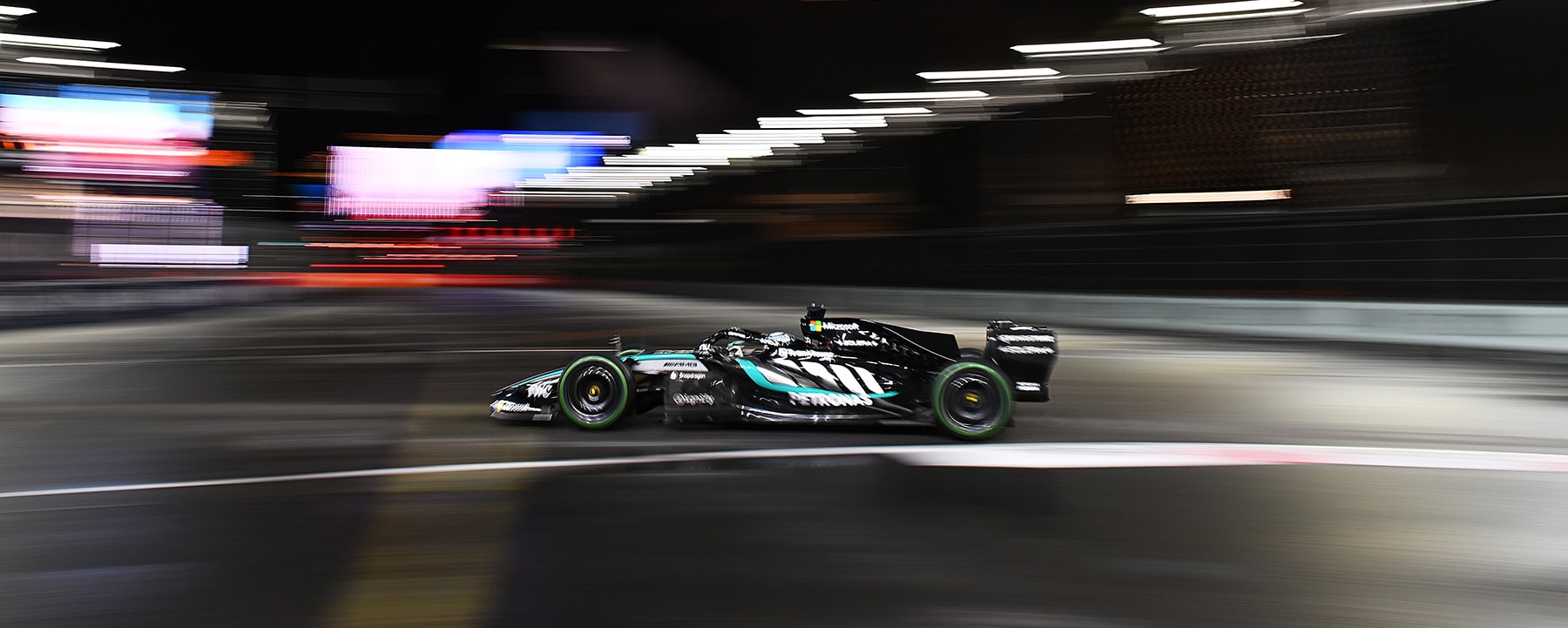
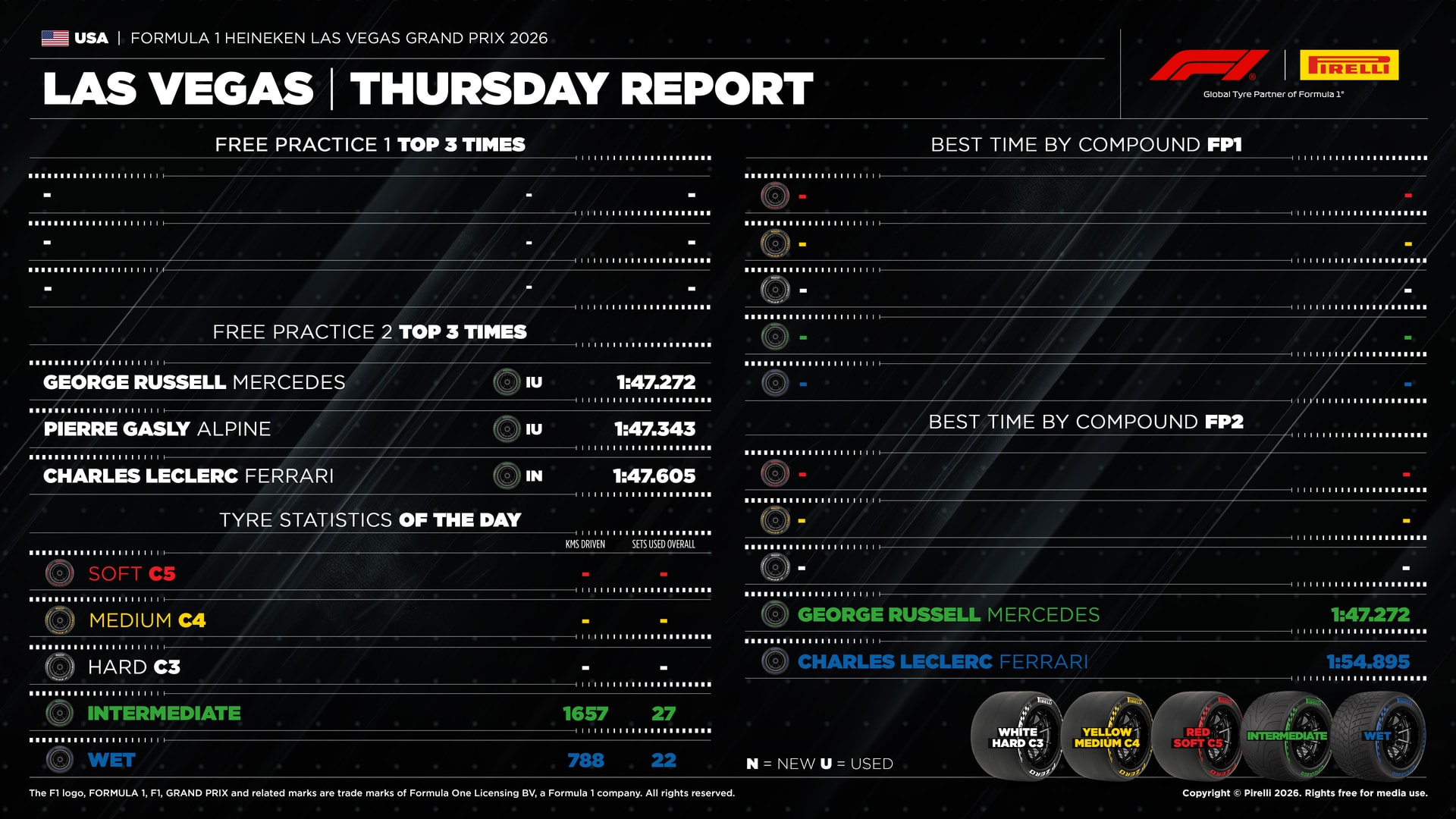
The second free practice session in Las Vegas, despite the tricky conditions on a wet track, allowed the drivers to log a meaningful amount of mileage. Both the Full Wet and Intermediate tyres were used extensively across the field. George Russell topped the timesheets with a 1:47.272 on Intermediates.
The second-fastest time was set by Pierre Gasly with a 1:47.343, while Charles Leclerc finished third on a 1:47.605. The Ferrari driver also completed the highest lap count of the session, with a total of 26 laps.
Leclerc initially completed nine laps on the Full Wet before switching to a set of Intermediates, on which he added a further 17 laps. With the exception of Pierre Gasly, Franco Colapinto and Valtteri Bottas, all drivers took to the track in FP2 on the extreme wet tyre before changing to Intermediates. The three aforementioned drivers ran exclusively on Intermediates throughout the second hour.
At the start of the session there was light rain, which gradually stopped, helping the track to dry progressively. Air temperature dropped to 11°C, while track temperature remained around 15°C, values very similar to those recorded during FP1.
In the first hour, held in the rain, drivers spent very little time on track. No lap times were recorded, but the two Alpine drivers completed the most laps, with three each. All drivers ran exclusively on Full Wets during FP1, completing only a very limited number of laps overall.
 SIMONE BERRA – PIRELLI CHIEF ENGINEER
“Today's track conditions limited the teams' workload and made both sessions of little value in preparation for the remainder of the weekend. During FP1, the amount of standing water on the track meant that teams completed only installation laps. In the second session, the circuit gradually evolved from wet to damp, drying very slowly. Full Wets were used in the early stages before teams switched to Intermediates. Neither wet-weather tyre showed any signs of graining, even during the crossover phase.
As the racing line gradually dried, wear on the Intermediates inevitably increased, particularly in the closing stages of the session when the ideal line was almost completely dry. The switch to slicks never occurred because some areas of the track remained very damp, including the painted road markings, which are especially slippery in these conditions, while the low temperatures would have made it difficult to bring dry-weather tyres up to operating temperature quickly.
Given that the forecast for both qualifying and the race indicates no risk of rain, the most meaningful work will probably begin tomorrow, when teams will be able to focus on car set-up and gather more useful data to define their strategies. From this perspective, it will be interesting to see which tyre sets are returned at the end of the day, as this could already provide the first indications of the strategic direction teams are taking for the race.”
Founded in 1872, Pirelli is a company with deep Italian roots now recognised all over the world for its cutting-edge technology, capacity for innovation, and the quality of its products. Motorsport has always played an important part in Pirelli’s strategy, following the ‘race to road’ philosophy. The company has been engaged in motorsport for 119 years and today supplies tyres to more than 350 championships on both two and four wheels. Pirelli pays constant attention to the most efficient use of natural resources and energy, and will reach carbon neutrality by 2030.
Pirelli has been Global Tyre Partner of the FIA Formula 1 World Championship since 2011. The company also supplies championships including FIA Formula 2, FIA Formula 3, Formula Regional European Championship by Alpine and GT World Challenge, alongside numerous national series.